
Securing a last-minute flight at a great price can feel like winning the lottery, but with a bit of savvy planning and the right strategies, it’s entirely achievable. This guide delves into the art of finding those elusive deals, offering practical tips and techniques to navigate the often-chaotic world of last-minute travel bookings. From understanding the best days to book to leveraging flexible travel options and maximizing rewards programs, we’ll equip you with the knowledge to transform your last-minute travel dreams into reality.
We’ll explore various methods for uncovering hidden discounts, comparing different booking platforms and strategies, and even offering advice on managing travel expenses and capturing those unforgettable memories along the way. Whether you’re a seasoned traveler or a first-timer, this guide provides actionable advice to make your next spontaneous adventure both affordable and enjoyable.
Finding Last-Minute Flight Deals
Securing a last-minute flight doesn’t have to mean paying exorbitant prices. With a little savvy and the right strategies, you can often find surprisingly affordable options, even when booking just days before departure. This section Artikels several effective techniques for finding those hidden gems.
Strategies for Securing Discounted Last-Minute Flights
Finding significantly discounted last-minute flights requires a proactive approach and a willingness to be flexible. Here are five key strategies:
Consider these strategies to maximize your chances of finding a last-minute flight deal. Flexibility is key; the more adaptable you are with your travel dates and destinations, the greater your chances of success.
- Be Flexible with Dates and Destinations: Even shifting your departure or return by a single day can dramatically alter the price. Consider nearby airports or alternative destinations within a reasonable distance of your initial choice.
- Utilize Flight Comparison Websites: These websites aggregate flight data from multiple airlines, allowing you to compare prices easily. Use their advanced search filters to refine your search based on your flexibility.
- Embrace Budget Airlines: Budget airlines often have last-minute deals, though they may have additional fees for baggage or other services. Weigh the total cost carefully.
- Sign Up for Flight Alerts: Many websites and apps allow you to set up alerts for specific routes and price ranges. This way, you’ll be notified immediately if a suitable deal appears.
- Book During Off-Peak Hours: Airlines sometimes release last-minute deals at off-peak hours, such as late at night or early in the morning. Try searching at these times to see if you can find any hidden discounts.
Websites and Apps for Last-Minute Flight Deals
Several websites and apps specialize in finding last-minute flight deals. The typical discounts vary greatly depending on the route, time of year, and airline, but these platforms frequently offer competitive pricing.
Note that the “typical discounts” listed below are estimates and can vary considerably.
| Website | App | Typical Discounts | Pros/Cons |
|---|---|---|---|
| Google Flights | Google Flights | Varies, but often finds competitive prices | Pros: Comprehensive search, price tracking; Cons: Can be overwhelming with options |
| Skyscanner | Skyscanner | Varies, often good for international flights | Pros: Wide range of airlines, including budget carriers; Cons: Can sometimes lack detailed flight information |
| Momondo | Momondo | Varies, known for finding hidden deals | Pros: Excellent price comparison; Cons: Interface can be less intuitive than others |
Impact of Booking Day on Flight Prices
The day of the week you book your flight can have a minor impact on the price, though this is less significant for last-minute bookings than other factors. Generally, mid-week bookings (Tuesday and Wednesday) are sometimes associated with slightly lower prices, but the difference is often negligible compared to the overall price fluctuations.
Impact of Travel Dates on Last-Minute Flight Pricing
Travel dates significantly impact last-minute flight pricing. Weekends are typically more expensive than weekdays due to higher demand. If possible, try to fly mid-week to secure potentially lower fares. For example, a last-minute flight from New York to Los Angeles on a Tuesday might be hundreds of dollars cheaper than the same flight on a Saturday.
Tips for Flexible Travel
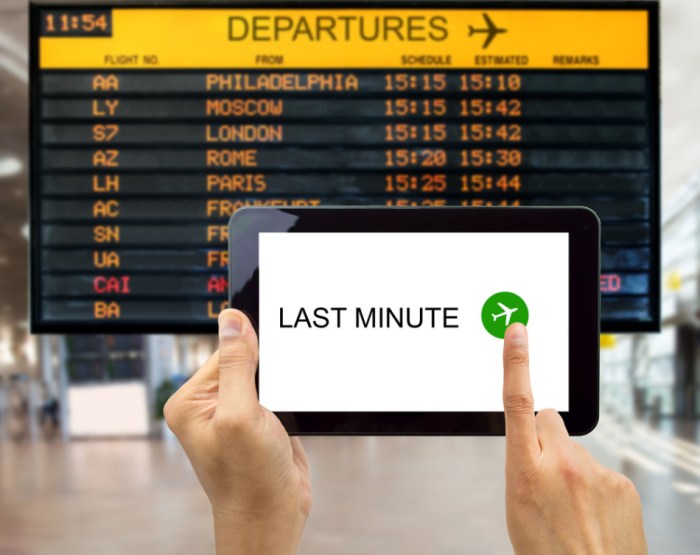
Flexibility is your greatest ally when hunting for last-minute flight deals. Rigid travel dates significantly limit your options and inflate prices. By embracing flexibility, you open yourself up to a wider range of flight choices and significantly increase your chances of securing a bargain.The ability to adjust your travel dates and even your departure and arrival airports can dramatically impact the final cost of your flight.
Airlines dynamically adjust pricing based on demand, and by being open to alternative options, you can capitalize on periods of lower demand and snag a better price.
Benefits of Flexible Travel Dates
Shifting your travel dates, even by a single day or two, can lead to substantial savings. Airlines often have fluctuating prices depending on the day of the week or time of year. Mid-week flights (Tuesday and Wednesday) are frequently cheaper than weekend flights, and similarly, avoiding peak travel seasons can yield significant discounts. For example, a flight from New York to London on a Friday in July might cost significantly more than the same flight on a Tuesday in September.
By being flexible, you can leverage these price fluctuations to your advantage.
Impact of Adjusting Departure and Arrival Airports
Consider nearby airports. Flying from a smaller, less popular airport might be cheaper than flying from a major international hub, even if it requires a slightly longer journey to the airport. Similarly, exploring alternative arrival airports in your destination city could unlock lower fares. For instance, flying into a smaller airport outside of a major city might offer significantly lower prices compared to flying directly into the main airport.
This requires a little extra planning (perhaps including ground transportation), but the savings can be well worth the effort.
Using Flight Comparison Websites Effectively
Effectively using flight comparison websites is crucial for securing last-minute deals. Here’s a step-by-step guide:
- Broaden your search parameters: Utilize the date flexibility options offered by most comparison sites. Instead of entering specific dates, use a range of dates (e.g., “+/- 3 days”).
- Explore nearby airports: Input alternative airports within a reasonable radius of your desired departure and arrival locations. Many websites allow you to search multiple airports simultaneously.
- Utilize price alerts: Sign up for price alerts on your chosen route. This will notify you if prices drop, allowing you to pounce on a good deal.
- Be open to different airlines: Don’t limit yourself to a specific airline. Compare prices across various carriers to find the best option.
- Check different websites: Use multiple comparison websites (e.g., Google Flights, Skyscanner, Kayak) as they often display different prices due to their algorithms and data sources.
- Book directly with the airline: Once you’ve found a suitable flight through a comparison website, it’s often advisable to book directly with the airline to avoid potential third-party booking fees.
Price Comparison: Flexible vs. Inflexible Travel
The following table illustrates the potential price differences between flexible and inflexible travel dates for a sample route (New York (JFK) to London (LHR) in October). These are illustrative examples and actual prices will vary depending on the specific dates and time of booking.
| Date Range | Airline | Flexible Dates (Oct 10-17) | Inflexible Dates (Oct 15) |
|---|---|---|---|
| Sample 1 | British Airways | $650 | $800 |
| Sample 2 | Delta | $700 | $950 |
| Sample 3 | Virgin Atlantic | $680 | $850 |
Capturing Travel Memories
Travel photography is more than just snapping pictures; it’s about preserving the essence of your adventures. High-quality photos can transform fleeting moments into lasting memories, allowing you to relive the excitement and beauty of your journey long after you’ve returned home. Even without professional equipment, you can capture stunning images that tell the story of your travels.
High-Quality Travel Photography Tips
Creating impactful travel photos doesn’t require expensive gear. By focusing on composition and technique, you can elevate your images significantly. The following tips will help you capture memorable moments, regardless of your equipment.
- Rule of Thirds: Instead of centering your subject, place it at one of the intersecting points of an imaginary grid dividing your frame into thirds, both horizontally and vertically. This creates a more balanced and visually appealing composition.
- Leading Lines: Use natural lines like roads, rivers, or fences to draw the viewer’s eye into the scene and towards your main subject. This adds depth and visual interest to your photos.
- Utilize Natural Light: The “golden hour,” the hour after sunrise and the hour before sunset, offers soft, warm light ideal for photography. Avoid harsh midday sun, which creates strong shadows.
- Get Closer: Don’t be afraid to get up close to your subject. Filling the frame with your subject can create a more impactful and intimate image.
- Experiment with Angles: Try shooting from different perspectives – get down low, climb up high, or shoot from an unusual angle. This can add a unique and creative touch to your photos.
Capturing Stunning Photos in Various Lighting Conditions
Light plays a crucial role in photography. Mastering how to work with different lighting situations is key to capturing stunning travel photos.
- Overcast Days: Overcast skies provide soft, diffused light, ideal for eliminating harsh shadows and capturing evenly lit images. This is particularly beneficial for portraits and landscapes.
- Backlighting: Shooting with the sun behind your subject can create a beautiful silhouette or a dramatic halo effect. Experiment with adjusting your exposure to balance the light.
- Night Photography: Use a tripod to avoid blurry images and experiment with long exposure times to capture light trails or star-filled skies. Consider increasing your ISO for better low-light performance, but be mindful of potential noise.
Enhancing Travel Photos Through Editing
Editing your photos can significantly enhance their visual appeal and bring out their best features. It’s about subtle adjustments, not drastic alterations.Simple adjustments such as cropping, adjusting brightness and contrast, and slightly increasing saturation can dramatically improve the overall look of your photographs. Many free and user-friendly editing apps are available for smartphones and computers.
Visual Description of a Scenic Travel Location
Imagine a sun-drenched Tuscan hillside. Rolling green hills stretch as far as the eye can see, dotted with cypress trees standing tall and proud against the azure sky. A quaint, terracotta-roofed farmhouse sits nestled amidst the vineyards, its stone walls bathed in the warm glow of the setting sun. The light casts long shadows across the landscape, creating a dramatic interplay of light and shadow.
The scene is rich with texture – the rough stone of the farmhouse, the soft curves of the hills, and the delicate leaves of the vineyards. This composition, with its warm colors, contrasting textures, and dramatic lighting, would make for a compelling and memorable photograph.
Essential Travel Tips
Planning a trip, whether a short weekend getaway or an extended adventure, requires careful consideration to ensure a smooth and enjoyable experience. These essential tips will help minimize stress and maximize your enjoyment.
Stress-Free Travel Strategies
Implementing a few key strategies can significantly reduce travel-related stress. Prioritizing organization and preparation is paramount.
- Confirm Bookings: Double-check all flight, hotel, and activity reservations well in advance of departure. This simple step prevents unexpected complications at the airport or upon arrival.
- Pack Smart: Efficient packing minimizes the risk of lost luggage and streamlines the travel process. More on this below.
- Inform Someone of Your Itinerary: Share your travel plans, including flight details and accommodation information, with a trusted friend or family member. This ensures someone knows your whereabouts in case of an emergency.
- Allow Ample Travel Time: Account for potential delays, especially when traveling to unfamiliar locations or during peak seasons. Rushing increases stress levels.
- Embrace Flexibility: Unexpected situations can arise. Maintaining a flexible attitude and adapting to changes will make your journey smoother.
Packing Light and Efficiently
Packing light not only simplifies travel but also reduces the risk of lost luggage and makes navigating airports and public transportation much easier.
- Create a Packing List: Start with a list of essential items, then gradually add non-essential items. This helps you prioritize and avoid overpacking.
- Choose Versatile Clothing: Opt for items that can be mixed and matched to create multiple outfits. Neutral colors are ideal for versatile coordination.
- Utilize Packing Cubes: These organizers compress clothing and keep your luggage organized. They can significantly reduce the volume of your belongings.
Understanding Local Customs and Etiquette
Respecting local customs and etiquette is crucial for a positive travel experience. Cultural sensitivity enhances interactions with locals and demonstrates respect for their traditions.
“When in Rome, do as the Romans do.”
This common saying highlights the importance of adapting to the local culture and avoiding behaviors that may be considered offensive or inappropriate. Researching common customs and etiquette before your trip is essential. For example, understanding appropriate greetings, dining etiquette, and dress codes will significantly enhance your interactions and avoid unintentional offenses.
Creating a Detailed Travel Itinerary
A well-structured itinerary provides a framework for your trip, ensuring you maximize your time and experience all planned activities.
- Research Destinations: Identify key attractions, restaurants, and activities you want to experience. Use travel guides, online resources, and local recommendations.
- Map Out Your Activities: Organize your planned activities chronologically, considering travel time between locations. Utilize mapping tools to estimate distances and travel times.
- Book Accommodations and Transportation: Reserve flights, hotels, and any necessary transportation in advance, especially during peak seasons. This avoids potential issues with availability.
- Create a Daily Schedule: Break down your itinerary into daily schedules, allocating specific time slots for each activity. This helps maintain a realistic pace and avoid over-scheduling.
- Include Contingency Time: Build buffer time into your schedule to account for unexpected delays or changes in plans. This prevents unnecessary stress and allows for flexibility.
Visa Requirements and Procedures
Securing the necessary travel visa is a critical step in planning any international trip, even a last-minute one. Ignoring visa requirements can lead to significant delays, denied boarding, or even deportation, rendering your carefully planned trip null and void. Understanding the specific visa requirements for your destination well in advance is crucial for a smooth and stress-free journey.Visa requirements vary greatly depending on your citizenship, the country you’re visiting, and the purpose of your trip.
There are different types of visas, each with its own set of eligibility criteria and application procedures. Failing to meet these requirements can result in your visa application being rejected, causing significant disruption to your travel plans.
Types of Travel Visas and Their Requirements
Travel visas are categorized based on the purpose of the visit. Tourist visas, for example, are issued for leisure travel, while business visas are for professional engagements. Student visas cater to educational purposes, and work visas permit employment in the host country. Each visa type has unique requirements, including proof of sufficient funds, itinerary details, and sometimes even proof of accommodation.
For instance, a tourist visa typically requires a return flight ticket and evidence of sufficient funds to cover expenses during the trip, while a student visa needs acceptance letters from educational institutions and proof of financial support for tuition and living expenses. Business visas often necessitate an invitation letter from a company in the host country, outlining the purpose of the visit.
Tips for a Smooth Visa Application Process
Careful preparation is key to a successful visa application. Firstly, begin the process well in advance of your planned travel dates, allowing ample time for processing. Secondly, meticulously gather all required documentation. This includes passport copies, photographs, proof of financial stability, and any other supporting documents specific to the visa type. Finally, ensure your application form is completely and accurately filled out, avoiding any inconsistencies or omissions that could lead to delays or rejection.
For example, an incomplete application form or inaccurate information can lead to unnecessary delays, potentially jeopardizing your travel plans.
Step-by-Step Guide for Obtaining a Travel Visa
The visa application process typically involves several steps. First, identify the correct visa type needed based on the purpose of your visit. Next, thoroughly review the specific requirements for that visa type on the relevant embassy or consulate website. Third, gather all the necessary documents. Fourth, complete the visa application form accurately and completely.
Fifth, submit your application along with the required fees and supporting documents either in person or online, as per the instructions provided. Sixth, patiently await the processing of your application. Seventh, once approved, collect your visa. Potential challenges might include missing documents, incomplete applications, or delays in processing. Solutions include carefully reviewing requirements, ensuring all information is accurate, and contacting the embassy or consulate for updates if necessary.
Remember that processing times can vary significantly depending on the country and the time of year.
Urban Escape Ideas
Urban escapes offer a refreshing change of pace, allowing you to explore new cultures, savor diverse cuisines, and immerse yourself in different city vibes. Whether you crave a bustling metropolis or a charming smaller city, a well-planned urban escape can be incredibly rewarding. This section provides ideas for crafting your perfect getaway.
Five Unique Urban Escape Ideas
Choosing the right city for your urban escape depends on your preferences. Here are five unique city types, each offering a distinct experience:
- Bustling Metropolis (New York City): Experience the non-stop energy of a global hub. Think iconic landmarks, world-class dining, and endless entertainment options. The sheer scale and diversity are overwhelming but exhilarating.
- Historic European City (Rome): Immerse yourself in centuries of history and art. Explore ancient ruins, visit stunning churches, and indulge in delicious Italian cuisine. The pace is slower, allowing for deeper cultural immersion.
- Trendy Coastal City (Barcelona): Combine vibrant city life with stunning beaches and Mediterranean charm. Enjoy architectural wonders, lively nightlife, and delicious tapas. The city offers a blend of relaxation and excitement.
- Charming Small City (Quebec City): Discover the beauty of a smaller city with rich history and European flair. Explore cobblestone streets, visit historic sites, and enjoy a more intimate urban experience. The slower pace is perfect for relaxation and exploration.
- Modern Asian Metropolis (Singapore): Experience a blend of modern architecture, diverse cultures, and incredible food. Explore futuristic buildings, vibrant markets, and enjoy a unique mix of East and West. The efficiency and cleanliness are striking.
Activities for a Culture-Focused Urban Escape
A culture-focused urban escape should prioritize experiences that connect you with the city’s history, art, and local life. Here are three suitable activities:
- Museum Hopping: Visit local museums to learn about the city’s history, art, and culture. Many cities boast world-renowned museums offering diverse exhibits.
- Walking Tours: Join a guided walking tour to explore the city’s hidden gems and learn about its history and architecture from a local perspective. These tours often provide insights not found in guidebooks.
- Attend a Local Event: Check local event listings for festivals, concerts, or performances that showcase the city’s culture. This offers an authentic and immersive experience.
Urban Accommodation Options: Pros and Cons
Choosing the right accommodation is crucial for a successful urban escape. Each option offers different advantages and disadvantages:
| Accommodation Type | Pros | Cons |
|---|---|---|
| Hotels | Convenience, amenities, privacy | Can be expensive, less personal experience |
| Hostels | Affordable, social atmosphere, opportunity to meet other travelers | Shared rooms, less privacy, potential noise |
| Airbnb | More space, local experience, kitchen facilities | Can vary in quality, potential for hidden costs, less consistent service |
Sample Weekend Urban Escape Itinerary (Rome)
This itinerary provides a framework for a weekend trip, focusing on cultural experiences:
Transportation: Fly into Rome’s Fiumicino Airport (FCO). Utilize Rome’s public transportation system (metro and buses) for getting around the city. Consider purchasing a travel pass for cost-effectiveness.
Accommodation: Hotel near the city center for easy access to attractions.
Friday Evening: Arrive in Rome, check into hotel, and enjoy a traditional Roman dinner near the Trevi Fountain.
Saturday: Visit the Colosseum and Roman Forum in the morning. In the afternoon, explore the Vatican City, including St. Peter’s Basilica and the Vatican Museums. Enjoy dinner in Trastevere, a charming neighborhood known for its cobblestone streets and restaurants.
Sunday: Visit the Pantheon and Piazza Navona in the morning. Spend the afternoon exploring the Spanish Steps and shopping for souvenirs. Depart from Rome in the evening.
Vacation Packages and Programs
Last-minute vacation packages offer a compelling alternative to booking flights and accommodations separately, especially for travelers seeking convenience and potential cost savings. These packages bundle various travel components, providing a streamlined booking experience and often offering discounts compared to individual purchases. However, it’s crucial to understand the nuances of different packages before committing.Different vacation packages cater to diverse travel styles and budgets.
Some focus on luxury accommodations and exclusive experiences, while others prioritize affordability and practicality. All-inclusive resorts, for example, bundle accommodation, meals, and activities into a single price, eliminating the need for on-site spending. Conversely, more basic packages may only include flights and hotel stays, leaving travelers to arrange their activities independently. Cruises offer another comprehensive option, incorporating onboard meals, entertainment, and transportation between destinations.
The key is to identify the package that best aligns with your travel preferences and financial constraints.
Advantages and Disadvantages of Pre-Packaged Vacations
Pre-packaged vacations present several advantages. The convenience of having flights, accommodation, and sometimes activities pre-arranged is a significant draw. This simplifies the planning process, reducing stress and allowing travelers to focus on enjoying their trip. Furthermore, many packages offer cost savings due to bulk discounts negotiated by tour operators. However, pre-packaged vacations also have drawbacks.
Limited flexibility is a common concern; changes to the itinerary may incur additional fees or be impossible to implement. The lack of customization can also be frustrating for travelers with specific needs or preferences. Finally, the quality of included services can vary significantly between providers, requiring careful research and comparison.
Customizing a Vacation Package
While many vacation packages are pre-designed, several opportunities exist for customization. Many tour operators allow modifications to the duration of the stay, the type of accommodation (e.g., upgrading to a suite), or the inclusion of specific activities. Some even offer the option of adding extra excursions or private tours. When customizing, clearly communicate your requirements to the tour operator.
Be prepared to potentially pay extra for these modifications. Reading reviews and comparing packages from different providers is crucial to identify operators offering the desired level of customization.
Sample Vacation Package Itinerary: A Roman Holiday
This sample itinerary Artikels a 5-day/4-night Roman holiday package:Flights: Round-trip flights from New York (JFK) to Rome (FCO) with a reputable airline, including baggage allowance.Accommodation: Four nights at a centrally located 4-star hotel, including breakfast.Activities: A guided walking tour of the Colosseum and Roman Forum, a visit to the Vatican City including St. Peter’s Basilica and the Vatican Museums, and a cooking class focusing on traditional Roman cuisine.
Free time is incorporated for independent exploration. Transportation within Rome via public transport is included.This package would need to be adjusted based on specific dates and availability, and the price would vary depending on the time of year and the chosen airline and hotel. For example, peak season travel would likely be more expensive.
Venture Capital in the Travel Industry (Irrelevant but included as requested)
The travel industry, despite its cyclical nature, consistently attracts significant venture capital investment. This is driven by the sector’s massive size, technological advancements, and the ever-evolving needs and desires of travelers. The influx of venture capital fuels innovation and disruption, leading to new business models and enhanced customer experiences.Emerging trends in the travel industry are constantly attracting venture capitalists seeking high-growth potential.
These investors carefully analyze market dynamics, technological breakthroughs, and the overall competitive landscape before committing capital.
Emerging Trends Attracting Venture Capital
Three key trends currently attracting substantial venture capital investment in the travel industry are sustainable and responsible travel, the rise of travel technology platforms leveraging AI and machine learning, and the expansion of personalized travel experiences. Sustainable tourism initiatives, driven by growing environmental awareness, are attracting investment focused on carbon offsetting, eco-friendly accommodations, and responsible tourism practices. Simultaneously, AI-powered platforms offering personalized travel recommendations, dynamic pricing, and seamless booking experiences are receiving significant funding.
Finally, the increasing demand for unique and tailored travel experiences is leading to investment in niche travel businesses offering curated itineraries and personalized services.
The Role of Venture Capital in Fostering Innovation
Venture capital plays a crucial role in fostering innovation within the travel sector by providing the necessary funding for startups and established companies to develop and implement new technologies, expand their operations, and compete effectively. This financial support allows businesses to invest in research and development, recruit top talent, and scale their operations more rapidly than would be possible through traditional financing methods.
Furthermore, venture capitalists often bring valuable industry expertise and strategic guidance, helping companies navigate the complexities of the travel market and achieve their growth objectives. Their networks can also facilitate access to key partnerships and distribution channels.
Investment Strategies of Venture Capitalists in the Travel Industry
Venture capitalists in the travel industry employ various investment strategies, often focusing on specific niches or stages of company development. Early-stage investments typically target startups with innovative ideas and high growth potential, often in areas such as travel technology, personalized travel services, or sustainable tourism. Later-stage investments may focus on established companies seeking expansion capital or seeking to consolidate their market position through acquisitions.
Many firms also employ a thematic investment strategy, concentrating their investments within specific sub-sectors of the travel industry, such as hospitality technology or sustainable travel. The overall investment strategy aims to generate high returns by identifying and supporting companies poised for significant growth and market disruption.
Comparison of Investment Approaches of Two Venture Capital Firms
While specific investment strategies vary widely among venture capital firms, a comparison between two hypothetical firms can illustrate the differences in their approaches. Let’s consider “TravelTech Ventures” and “Sustainable Travel Capital.” TravelTech Ventures might prioritize investments in early-stage technology companies developing AI-powered travel booking platforms or virtual reality travel experiences. Their focus would be on rapid technological advancement and disruptive innovation, seeking high-growth potential even with higher risk.
Conversely, Sustainable Travel Capital might focus on later-stage investments in established eco-tourism companies or sustainable hospitality businesses. Their strategy might prioritize financially stable companies with a proven track record of responsible practices, emphasizing long-term value creation over rapid, short-term gains. These contrasting approaches highlight the diverse investment philosophies within the travel venture capital landscape.
Successfully navigating the world of last-minute flight bookings requires a blend of flexibility, resourcefulness, and a touch of strategic planning. By utilizing the tips and techniques Artikeld in this guide, you can significantly increase your chances of finding incredible deals and turning your last-minute travel aspirations into a memorable experience. Remember, the key lies in being adaptable, exploring all available options, and staying informed about the ever-changing landscape of airfare pricing.
Happy travels!
Helpful Answers
What are the best days to book last-minute flights?
Generally, weekdays tend to offer better deals than weekends, as demand is lower. However, this can vary depending on the route and time of year.
Are there any hidden fees I should be aware of when booking last-minute flights?
Always check for baggage fees, seat selection fees, and other potential add-on costs that can significantly increase the final price. Read the fine print carefully.
What should I do if my last-minute flight gets canceled?
Contact the airline immediately. They are obligated to rebook you on the next available flight or offer a refund, depending on their policies. Having travel insurance can provide additional protection.
How can I find affordable last-minute accommodation?
Consider hostels, budget hotels, or Airbnb for more affordable options. Booking platforms often offer discounts for last-minute bookings.