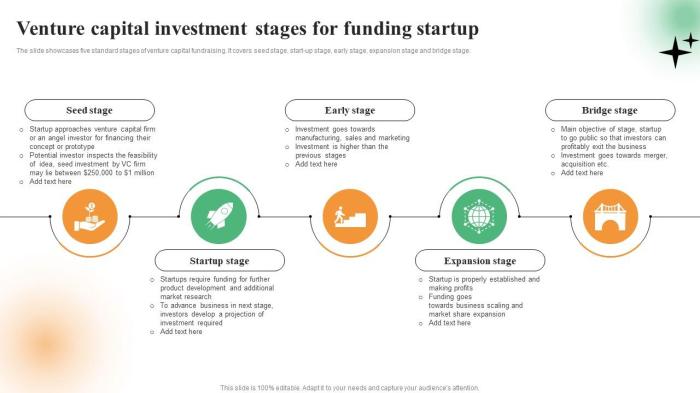
Venture capital, the lifeblood of countless innovative startups, follows a distinct lifecycle of investment stages. Understanding these stages – from the initial seed funding to the eventual exit – is crucial for both entrepreneurs seeking funding and investors looking for high-growth opportunities. This exploration delves into the key characteristics, financial considerations, and strategic implications of each stage, providing a comprehensive overview of the venture capital journey.
This journey isn’t a simple linear path; it’s a dynamic process shaped by market conditions, company performance, and investor expectations. We’ll examine the nuances of each funding round, highlighting the differences in investment amounts, valuation expectations, and the strategic goals pursued at each stage. Furthermore, we will discuss the various exit strategies available to both companies and investors, offering insights into the factors influencing successful exits and the overall landscape of venture capital.
Series A Funding
Series A funding represents a significant milestone for startups, marking a transition from the early, often experimental, stages of development to a period of focused growth and scaling. It signifies investor confidence in the company’s potential and its ability to execute its business plan effectively. This stage typically involves a larger investment than seed funding, and comes with increased scrutiny and expectations from investors.
Series A Funding Compared to Seed-Stage Funding
Seed-stage funding focuses primarily on validating the core idea and building a Minimum Viable Product (MVP). Series A, on the other hand, concentrates on scaling operations, expanding market reach, and demonstrating significant traction. Seed funding is often smaller in size and comes with less stringent requirements, while Series A funding necessitates a more robust business model, a proven market fit, and a clear path to profitability.
Seed rounds often involve angel investors or smaller venture capital firms, whereas Series A rounds typically attract larger venture capital firms and sometimes strategic investors. The valuation at Series A is significantly higher than at the seed stage, reflecting the company’s progress and increased potential.
Key Metrics for Series A Investment Decisions
Venture capitalists scrutinize a range of key metrics when considering a Series A investment. These include revenue growth, customer acquisition cost (CAC), customer lifetime value (CLTV), monthly recurring revenue (MRR) for SaaS businesses, gross margin, burn rate, and key performance indicators (KPIs) specific to the industry. They also analyze the team’s experience and execution capabilities, the market size and potential, and the competitive landscape.
A strong management team with a clear vision and a proven track record significantly increases the likelihood of securing funding. Furthermore, the presence of early adopters and strong customer relationships is a key indicator of market validation.
Traction and Market Validation in Securing Series A Funding
Traction, demonstrable evidence of market demand and product-market fit, is paramount in securing Series A funding. This can take many forms, including significant revenue growth, a substantial and growing user base, positive customer feedback, strategic partnerships, and intellectual property protection. Market validation demonstrates that the company’s product or service addresses a real market need and that there is sufficient demand to support sustainable growth.
Without substantial traction and market validation, securing Series A funding becomes significantly more challenging. For example, a company demonstrating consistent month-over-month revenue growth of 20% or more, along with a high customer retention rate, would be viewed very favorably.
Valuation Expectations for Series A Funding
Valuation expectations for Series A funding vary greatly depending on several factors, including the company’s traction, market size, competitive landscape, and the overall investment climate. However, valuations are typically significantly higher than seed-stage valuations, reflecting the company’s progress and increased potential. The valuation is often determined through a combination of methods, including discounted cash flow (DCF) analysis, comparable company analysis, and precedent transactions.
A company with strong traction and a large addressable market might command a higher valuation than a company with limited traction and a smaller market. For example, a successful Series A round might see a valuation increase of 5x or more compared to the seed round.
Seed and Series A Funding Comparison
| Round | Typical Investment Amount | Typical Timeline | Key Focus |
|---|---|---|---|
| Seed | $50,000 – $2 million | 3-6 months | MVP development, market validation |
| Series A | $2 million – $15 million+ | 6-12 months | Scaling operations, market expansion |
Series B and Subsequent Funding Rounds
Series B and subsequent funding rounds represent a crucial stage for venture-backed companies. Having successfully navigated the initial growth phase fueled by Series A funding, these later rounds focus on scaling operations, expanding market share, and ultimately preparing for an exit. The strategic goals, financial reporting requirements, and potential challenges differ significantly from earlier stages, demanding a more sophisticated approach from both the company and its investors.
Strategic Goals of Series B and Beyond
Companies raising Series B and later-stage funding typically pursue ambitious strategic goals aimed at achieving significant growth and market dominance. These goals often involve expanding product lines, penetrating new markets, accelerating sales and marketing efforts, and investing in research and development to maintain a competitive edge. For example, a SaaS company might use Series B funding to expand its sales team internationally, targeting new customer segments in Europe or Asia.
Another example might be a biotech firm leveraging Series C funding to initiate large-scale clinical trials for a promising new drug. These investments are not just about increasing revenue; they are about establishing a strong foundation for long-term sustainable growth and profitability.
Scaling Operations and Expanding Market Reach
Later-stage funding provides the necessary capital to execute on ambitious growth plans. This often translates into significant investments in infrastructure, personnel, and marketing. A company might use funding to build out its manufacturing capabilities, hire key personnel in sales, marketing, and engineering, or launch a major marketing campaign to increase brand awareness and drive customer acquisition. For instance, a food delivery startup might use Series C funding to expand its delivery network to new cities, hire more drivers, and improve its technology platform to enhance efficiency and customer experience.
This expansion is crucial for capturing market share and establishing a dominant position within the industry.
Financial Reporting Requirements in Later Stages
As companies mature and receive larger investments, the financial reporting requirements become more stringent. Investors expect a high level of transparency and detailed financial information to monitor progress and assess risk. This typically includes more frequent reporting (e.g., monthly or quarterly), detailed financial statements (including income statements, balance sheets, and cash flow statements), key performance indicators (KPIs) aligned with strategic goals, and regular updates on operational metrics.
The level of detail and sophistication required increases with each funding round, reflecting the increased investment and the higher expectations of investors. Audits by independent accounting firms also become more common.
Challenges in Securing Subsequent Funding
Securing subsequent funding rounds presents unique challenges. While early-stage investors may focus on the potential of a company’s idea, later-stage investors demand demonstrable traction, strong financial performance, and a clear path to profitability. Companies might face difficulties if they fail to meet projected milestones, experience unexpected setbacks, or operate in a highly competitive market. The economic climate also plays a significant role; during periods of economic uncertainty, securing funding becomes more challenging for even the most promising companies.
A strong management team with a proven track record and a compelling narrative around future growth are crucial for attracting investors in later stages.
Potential Exit Strategies for Venture-Backed Companies
Companies that have received multiple rounds of venture capital funding have several potential exit strategies. The choice of exit strategy depends on various factors, including the company’s performance, market conditions, and the preferences of investors.
- Initial Public Offering (IPO): Listing the company’s shares on a public stock exchange, allowing investors to sell their shares to the public.
- Acquisition: Being acquired by a larger company, either a strategic acquirer (a competitor or a company in a related industry) or a financial buyer (a private equity firm).
- Merger: Combining with another company to create a larger, more competitive entity.
- Secondary Buyout: Selling a portion of the company’s equity to a new investor, typically a private equity firm.
- Liquidation: Winding down the company’s operations and selling its assets.
Exit Strategies
Venture capitalists and portfolio companies ultimately aim for a successful exit, representing the realization of their investment. This involves selling the company’s equity to recoup the initial investment and generate a profit. Several strategies exist, each with its own timeline, risk profile, and potential return.
Initial Public Offerings (IPOs)
An Initial Public Offering (IPO) involves selling shares of a private company to the public on a stock exchange. This transforms the company from privately held to publicly traded, providing liquidity for investors. A successful IPO requires a strong track record, substantial market capitalization potential, and a compelling narrative to attract investors. The process is complex, involving regulatory filings, roadshows, and price setting.
Examples of highly successful tech IPOs include Google (GOOG), Facebook (META), and Alibaba (BABA), which generated substantial returns for early investors. The IPO process, however, can be lengthy and demanding, often taking several months to complete. Furthermore, the market’s reception of the IPO can significantly impact the final valuation and return for investors.
Mergers and Acquisitions (M&A)
Mergers and acquisitions represent another significant exit strategy. In a merger, two companies combine to form a new entity. An acquisition involves one company purchasing another. M&A transactions can be strategic, driven by synergies, market consolidation, or access to new technologies or markets. For example, Microsoft’s acquisition of LinkedIn significantly expanded its professional networking capabilities, and Salesforce’s acquisition of MuleSoft broadened its cloud integration offerings.
The valuation in an M&A deal is determined through negotiation between the buyer and seller, considering factors such as revenue, growth potential, market share, and intangible assets. The process itself can be complex, involving due diligence, legal negotiations, and regulatory approvals, potentially taking several months or even years to complete.
Factors Influencing Valuation at Exit
Several key factors influence a company’s valuation at exit. These include revenue growth, profitability, market share, the strength of the management team, the size and potential of the market, and the overall economic climate. A company with strong revenue growth, high profitability, and a dominant market share will generally command a higher valuation. Similarly, a strong management team with a proven track record can significantly increase the attractiveness of a company to potential buyers.
Conversely, a weak economy or a downturn in the specific industry can negatively impact valuation. Intangible assets, such as brand recognition and intellectual property, also play a crucial role in determining valuation. The valuation process is often complex and involves detailed financial modeling and comparative analysis of similar companies.
Comparison of Exit Strategy Timelines and Returns
Imagine a visual representation as a table. Across the top, we have three columns representing IPO, Acquisition by a larger company, and Acquisition by a Private Equity firm. Down the side, we have rows for Time to Exit (measured in years), and Potential Return (measured as a multiple of initial investment).For IPO, Time to Exit might range from 3-7 years, with Potential Return ranging from 3x to 10x or more, depending on market conditions.
For Acquisition by a larger company, Time to Exit could be 2-5 years, with Potential Return ranging from 2x to 8x. Finally, for Acquisition by a Private Equity firm, Time to Exit might be 3-7 years, and Potential Return could range from 2x to 6x. These are broad ranges, and the actual outcomes will vary significantly depending on the specific company, market conditions, and the negotiation process.
It’s important to remember that higher potential returns often come with higher risk and longer timelines.
Venture Capital Landscape
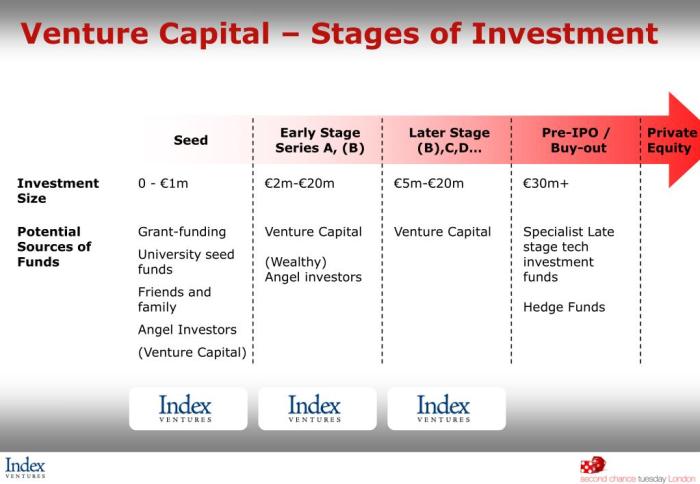
The venture capital (VC) industry is a dynamic ecosystem, constantly evolving in response to technological advancements, macroeconomic shifts, and the ever-changing needs of startups. Understanding the current trends, key players, and future outlook is crucial for both investors and entrepreneurs navigating this complex landscape.
Current Trends and Challenges
The VC industry currently faces a confluence of trends and challenges. Increased competition among firms for promising deals has driven up valuations, leading to concerns about potential overvaluation in certain sectors. Simultaneously, a tightening of macroeconomic conditions, including rising interest rates and inflation, has reduced the availability of capital and increased the scrutiny of investment decisions. This has resulted in a more cautious investment approach, with a greater emphasis on profitability and sustainable business models.
Furthermore, the growing importance of ESG (Environmental, Social, and Governance) factors is influencing investment strategies, with firms increasingly prioritizing companies with strong ESG profiles. The rise of alternative investment strategies, such as crowdfunding and angel investing, also presents both opportunities and challenges for traditional VC firms.
Key Players and Influential Firms
Several firms have established themselves as leaders in the VC landscape, shaping investment trends and influencing the success of numerous startups. Andreessen Horowitz (a16z), Sequoia Capital, and Accel are consistently ranked among the top-performing firms globally, known for their extensive networks, deep industry expertise, and successful track records. These firms often lead large funding rounds and play a significant role in shaping the direction of various technological sectors.
Other influential players include Kleiner Perkins, Insight Partners, and Tiger Global Management, each with its own unique investment focus and portfolio of companies. The geographical distribution of these firms is also noteworthy, with significant presence in Silicon Valley, New York, Boston, and increasingly in other global hubs like London and Tel Aviv.
Impact of Macroeconomic Factors
Macroeconomic conditions significantly influence venture capital investment activity. Periods of economic growth and low interest rates generally lead to increased investment and higher valuations, as investors are more willing to take on risk. Conversely, during economic downturns or periods of high inflation and rising interest rates, investment activity tends to slow down, and valuations may decline. The recent rise in interest rates, for instance, has made debt financing more expensive, impacting the ability of startups to raise capital and potentially slowing down growth.
Furthermore, inflation can erode the purchasing power of investments, prompting investors to become more selective and demanding higher returns. These macroeconomic factors directly influence the risk appetite of investors and the overall availability of capital for startups.
Future of Venture Capital and its Role in Innovation
The future of venture capital is likely to be shaped by several key factors. The increasing adoption of artificial intelligence (AI) and machine learning (ML) will likely transform the way VC firms conduct due diligence, analyze data, and make investment decisions. The rise of alternative investment strategies and the increasing involvement of corporate venture capital (CVC) arms of large corporations will continue to reshape the competitive landscape.
Furthermore, a greater emphasis on sustainability and ESG factors will drive investment decisions, with investors increasingly seeking out companies with positive social and environmental impact. Despite the challenges, venture capital will remain a crucial engine of innovation, providing essential funding and support to early-stage companies that are driving technological advancements and creating economic opportunities.
Hypothetical Investment Portfolio
A diversified venture capital portfolio should aim to mitigate risk by spreading investments across various sectors and stages of development. A hypothetical portfolio might include:
- 15% in early-stage AI/ML startups focused on healthcare applications.
- 15% in Series A fintech companies developing innovative payment solutions.
- 20% in growth-stage SaaS companies targeting enterprise clients.
- 10% in seed-stage companies in the renewable energy sector.
- 10% in Series B biotech companies developing novel therapeutics.
- 10% in late-stage e-commerce companies with strong international expansion potential.
- 20% in later-stage investments in established companies with proven track records within the portfolio’s existing sectors, allowing for potential follow-on investments and increased returns.
This hypothetical portfolio demonstrates the importance of diversification across sectors, stages, and risk profiles to maximize returns while minimizing potential losses. The specific allocation would naturally be adjusted based on market conditions and the firm’s investment strategy.
Travel Hacks (related, tangential topic)
Venture capital investments, while demanding significant focus and resources, often involve extensive travel for meetings, due diligence, and networking. Efficient and cost-effective travel is therefore a valuable skill for anyone in this field. These travel hacks can help reduce expenses and maximize the enjoyment of your trips, ensuring you’re well-rested and prepared for important business engagements.Effective travel strategies can significantly impact both your personal well-being and your professional success.
By implementing these methods, you can reduce stress, save money, and focus your energy on the critical aspects of your work. This allows for better decision-making and more productive interactions with potential investors or portfolio companies.
Cost-Effective Travel Strategies
Implementing smart booking techniques and mindful spending habits can drastically reduce your travel costs. These strategies are particularly beneficial for frequent travelers in the venture capital world, who often incur significant expenses related to airfare and accommodation.
- Utilize flight comparison websites: Websites such as Google Flights, Skyscanner, and Kayak allow you to compare prices from various airlines and identify the most economical options. Consider flying mid-week or during off-peak hours for lower fares.
- Be flexible with your travel dates: Adjusting your travel dates by even a day or two can often result in significant savings. Experiment with different departure and return dates to find the best deals.
- Consider alternative airports: Flying into smaller, less popular airports near your destination can sometimes offer cheaper flights. Weigh the convenience against the potential cost savings.
- Pack light: Avoid checked baggage fees by packing only essential items in a carry-on bag. This saves money and time at the airport.
- Look for budget-friendly accommodation: Explore options like Airbnb, hostels, or budget hotels to reduce accommodation costs. Consider location carefully, balancing cost with proximity to meetings or events.
- Take advantage of loyalty programs: Enroll in airline and hotel loyalty programs to earn points and miles that can be redeemed for future travel. These programs often offer additional benefits such as priority boarding and lounge access.
Maximizing Travel Enjoyment
While cost-effectiveness is crucial, optimizing your travel experience for enjoyment and productivity is equally important. A well-rested and relaxed individual is better equipped to handle the demands of venture capital work.
- Plan ahead: Research your destination and plan your itinerary in advance to avoid wasting time and money. This includes booking transportation and activities in advance, particularly during peak season.
- Prioritize sleep: Ensure you get adequate sleep before, during, and after your travels to maintain energy levels and improve focus. This is particularly crucial for important meetings and presentations.
- Stay hydrated: Drink plenty of water throughout your journey to combat jet lag and stay refreshed. Dehydration can negatively impact energy levels and concentration.
- Take advantage of downtime: Incorporate short breaks and relaxation activities into your itinerary to prevent burnout. Even short periods of rest can significantly improve productivity and mood.
- Embrace local culture: Explore local markets, restaurants, and attractions to immerse yourself in the culture of your destination. This can provide a welcome respite from the demands of business travel.
Travel Insurance (related, tangential topic)
Securing travel insurance is a crucial aspect of planning any trip, regardless of its duration or destination. It provides a financial safety net against unforeseen circumstances that can disrupt travel plans and potentially lead to significant expenses. The level of coverage needed varies depending on individual circumstances and the type of trip, but having some form of protection is generally recommended.Travel insurance policies offer a range of coverage options, designed to mitigate various risks associated with travel.
These policies can be tailored to meet specific needs, offering protection for everything from trip cancellations to medical emergencies abroad. Understanding the different types of coverage available is essential for making an informed decision.
Types of Travel Insurance Coverage
Travel insurance policies typically offer several key types of coverage. These can be bundled together or purchased individually, depending on the insurer and the policyholder’s requirements. Choosing the right coverage depends on factors such as the length of the trip, the destination, and the traveler’s individual risk tolerance.
Trip Cancellation and Interruption Coverage
This covers the costs associated with canceling or interrupting a trip due to unforeseen circumstances such as illness, injury, severe weather, or family emergencies. For example, if a traveler becomes seriously ill before their departure and is unable to travel, this coverage would reimburse them for non-refundable trip expenses, such as flights and accommodation. The specific circumstances covered vary between policies, and it’s important to carefully review the policy wording to understand the extent of this protection.
Medical Expenses Coverage
Medical expenses incurred while traveling abroad can be extraordinarily high. Medical evacuation, which can cost tens of thousands of dollars, is a particularly expensive consideration. This coverage reimburses the policyholder for medical expenses, including hospitalization, doctor visits, and emergency medical transportation. Many policies also cover repatriation (returning the body to the home country) in case of death. It’s crucial to check that the policy covers the specific medical needs of the traveler, particularly pre-existing conditions.
Baggage Loss and Delay Coverage
This type of coverage compensates for lost, stolen, or delayed baggage. It can reimburse the policyholder for the value of their belongings or provide a temporary allowance for essential items while waiting for their luggage. The amount of compensation typically varies based on the value of the lost items and the specific policy terms. Some policies also cover baggage delays, offering reimbursement for essential items purchased while waiting for the delayed luggage.
Emergency Assistance Services
Many travel insurance policies include 24/7 emergency assistance services. This can be invaluable in unexpected situations, providing access to medical advice, emergency medical evacuation coordination, and assistance with lost documents or other travel-related problems. The level of assistance provided can vary between policies, but this feature is often considered an essential component of comprehensive travel insurance.
Travel Photography (related, tangential topic)
Travel photography offers a unique blend of capturing breathtaking landscapes and documenting personal experiences. It’s about more than just pointing and shooting; it’s about telling a story through your images, evoking emotion, and preserving memories. Mastering the art of travel photography involves understanding light, composition, and post-processing techniques.Capturing stunning travel photographs requires a blend of technical skill and artistic vision.
It’s about seeing the world through a photographer’s eye, identifying compelling compositions, and using the right tools to translate that vision into captivating images. Beyond the technical aspects, the ability to connect with a location and its essence is crucial for creating truly memorable photographs.
Understanding Light and Composition
Effective travel photography hinges on understanding the interplay of light and composition. The “golden hour,” the period shortly after sunrise and before sunset, offers soft, warm light that’s ideal for highlighting textures and creating a sense of tranquility. Conversely, the “blue hour,” occurring just before sunrise and after sunset, provides a cool, moody atmosphere. Mastering these lighting conditions can significantly elevate the impact of your photographs.
Compositional techniques, such as the rule of thirds, leading lines, and framing, help guide the viewer’s eye and create a more visually appealing image. For example, placing the subject off-center (rule of thirds) creates a more dynamic and engaging composition than centering it. Using leading lines, such as a road or a river, can draw the viewer’s gaze into the photograph.
Framing a subject with natural elements, like trees or arches, adds depth and context.
Essential Equipment and Techniques
While advanced equipment can be helpful, stunning travel photos are not solely dependent on expensive gear. A high-quality smartphone camera can produce excellent results, particularly when paired with good composition and lighting. However, for more control and versatility, a DSLR or mirrorless camera with interchangeable lenses is recommended. A wide-angle lens is essential for capturing expansive landscapes, while a telephoto lens allows for closer shots of distant subjects.
A tripod is invaluable for sharp images in low-light conditions or when using longer shutter speeds. Understanding basic photographic techniques, such as aperture, shutter speed, and ISO, is crucial for controlling depth of field, motion blur, and image brightness. For instance, a wide aperture (low f-number) creates a shallow depth of field, blurring the background and emphasizing the subject.
A fast shutter speed freezes motion, while a slow shutter speed can create motion blur, such as in flowing water. A lower ISO value reduces noise, resulting in cleaner images.
Post-Processing and Editing
Post-processing is an integral part of travel photography. Software such as Adobe Lightroom or Photoshop allows for adjustments to brightness, contrast, saturation, and sharpness. Careful editing can enhance the mood and impact of your photographs, bringing out details and correcting imperfections. However, it’s crucial to avoid over-editing, which can make images look artificial. The goal is to enhance, not to alter, the original image.
For example, subtle adjustments to contrast can significantly improve the overall impact of a landscape photograph, making the colors more vibrant and the details more defined. Similarly, selective sharpening can enhance the focus on key elements within the image.
Travel Tips (related, tangential topic)
Planning a trip, whether a weekend getaway or a month-long adventure, requires careful consideration. A little preparation can significantly enhance your travel experience, minimizing stress and maximizing enjoyment. This guide offers essential tips applicable to various destinations and travel styles.
Packing Essentials
Efficient packing is crucial for comfortable travel. Overpacking leads to unnecessary weight and hassle. A well-organized bag, containing only essential items, ensures a smoother journey. Consider the climate and activities planned for your trip when selecting clothing and gear. A packing list, tailored to your specific needs, helps prevent forgetting important items.
Remember to check airline baggage restrictions before packing to avoid additional fees. Rolling clothes instead of folding them can save space.
Pre-Trip Preparations
Before embarking on your journey, several key steps contribute to a seamless experience. Confirming flight and accommodation details well in advance reduces potential problems. Making copies of important documents, such as passports and travel insurance policies, is essential in case of loss or theft. Notifying your bank and mobile phone provider of your travel plans prevents unexpected charges or service interruptions.
Researching your destination, including local customs and transportation options, ensures a more informed and enjoyable trip.
Navigating Transportation
Efficient and safe transportation is key to a successful trip. Researching various transportation options, such as public transit, taxis, or ride-sharing services, helps in making informed choices. Understanding local transportation systems and routes can save time and money. Consider purchasing transportation passes or tickets in advance, especially during peak seasons. Be aware of safety precautions when using public transportation, especially in unfamiliar environments.
For example, in many large cities, using the subway during peak hours may be less comfortable than during off-peak times.
Health and Safety
Prioritizing health and safety is paramount during travel. Consulting a doctor about necessary vaccinations and recommended health precautions is advisable, particularly for international travel. Travel insurance provides financial protection against unexpected medical expenses or trip cancellations. Being aware of local emergency numbers and procedures is crucial in case of an unforeseen incident. Staying alert to your surroundings and taking necessary precautions against theft or scams can help prevent unfortunate situations.
For instance, keeping valuables secure and avoiding walking alone in poorly lit areas at night are basic safety measures.
Respecting Local Customs
Understanding and respecting local customs and traditions is essential for a positive travel experience. Researching local etiquette and cultural norms helps avoid unintentional offenses. Learning a few basic phrases in the local language is a gesture of respect and can enhance interactions with locals. Being mindful of local dress codes and customs, especially when visiting religious sites, is important.
For example, dressing modestly when visiting religious sites in many cultures is a sign of respect and is generally expected.
Travel Visa (related, tangential topic)
Securing the appropriate travel visa is a crucial step in international travel planning. The process can vary significantly depending on your citizenship, your destination country, and the purpose of your visit. Failing to obtain the necessary visa can lead to significant delays or even prevent your travel altogether. This section Artikels the general process and considerations involved in applying for various travel visas.The application process typically involves completing an online application form, gathering required supporting documents, paying applicable fees, and attending an interview (in some cases).
The specific requirements and the timeline for processing will vary considerably from country to country. It’s essential to begin the visa application process well in advance of your planned travel dates to allow ample time for processing. Ignoring this can lead to missed opportunities and significant inconvenience.
Visa Application Forms and Procedures
The first step in obtaining a travel visa is usually completing an online application form. These forms often require detailed personal information, travel history, and the purpose of your visit. Accuracy is paramount; any discrepancies can lead to delays or rejection. Once completed, the form is typically submitted electronically, sometimes accompanied by supporting documentation uploaded as digital files.
After submission, you will often receive a confirmation number or email, indicating your application has been received.
Required Supporting Documentation
The specific documents required will vary depending on the visa type and the issuing country. However, common supporting documents include a valid passport with sufficient remaining validity (typically six months beyond your intended stay), proof of sufficient funds to cover your trip, a confirmed return or onward flight ticket, proof of accommodation (hotel reservations or an invitation letter), and a letter of invitation or employment documentation.
Some countries may also require medical certificates, police clearances, or proof of travel insurance. It is crucial to check the specific requirements for your destination country well in advance.
Visa Fees and Processing Times
Visa application fees vary significantly depending on the country and the type of visa. These fees are typically non-refundable, even if your application is rejected. Processing times also vary greatly, ranging from a few days to several months. It is crucial to check the processing time estimates provided by the embassy or consulate of your destination country and to apply well in advance of your intended travel dates.
Express visa services are sometimes available at an additional cost for faster processing.
Visa Interview (if required)
Some countries may require an in-person interview as part of the visa application process. This interview allows consular officers to assess your application and verify the information provided. Preparing for this interview is essential; be ready to answer questions about your travel plans, your purpose of visit, and your ties to your home country. Being well-prepared and presenting yourself professionally can significantly increase your chances of a successful application.
Urban Escapes (related, tangential topic)
Urban escapes offer a refreshing change of pace, allowing individuals to explore diverse cultures, architecture, and culinary scenes within a concentrated timeframe. These getaways can be tailored to various interests and budgets, providing opportunities for both relaxation and adventure. This section will Artikel sample itineraries for unique urban experiences in select global cities.
A Weekend in Lisbon, Portugal
Lisbon offers a captivating blend of history, vibrant culture, and stunning architecture. A weekend itinerary could begin with exploring the Alfama district, the oldest part of the city, characterized by its narrow, winding streets and colorful buildings. A ride on Tram 28 provides a charming way to navigate this historic area. Afterwards, visitors could ascend to São Jorge Castle for panoramic city views, followed by a leisurely stroll through the Baixa district, admiring the Pombaline architecture rebuilt after the 1755 earthquake.
An evening Fado performance would provide an authentic taste of Portuguese musical heritage, culminating in a delicious seafood dinner in the Bairro Alto neighborhood. The following day could involve exploring the Belém Tower and Jerónimos Monastery, significant historical landmarks reflecting Portugal’s maritime past. Finally, a visit to a local pasteleria for a Pastel de Nata would be the perfect sweet ending to this Lisbon escape.
Exploring the Culinary Delights of Tokyo, Japan
Tokyo offers a culinary journey unlike any other. A three-day itinerary could focus on exploring the city’s diverse gastronomic offerings. Day one might involve exploring the Tsukiji Outer Market, experiencing the vibrant atmosphere and sampling fresh seafood. A sushi-making class would provide a hands-on culinary experience, followed by an evening exploring the Shinjuku Golden Gai, known for its atmospheric, narrow alleyways filled with tiny bars and restaurants.
Day two could be dedicated to exploring the diverse ramen shops in the city, trying different broths and toppings. A visit to a traditional tea ceremony would provide a cultural counterpoint to the culinary adventures. Finally, day three could involve a visit to a high-end restaurant for a Kaiseki dinner, a multi-course Japanese haute cuisine experience.
A Cultural Immersion in Marrakech, Morocco
Marrakech offers a sensory overload of vibrant colors, exotic scents, and bustling souks. A four-day itinerary could begin with exploring the Djemaa el-Fna square, the heart of the city, observing the storytellers, musicians, and food vendors. A visit to the Bahia Palace and the Saadian Tombs would provide a glimpse into the city’s rich history and architectural heritage.
A cooking class focused on Moroccan cuisine would be an engaging way to learn about the country’s culinary traditions. The following days could be spent exploring the labyrinthine souks, bargaining for spices, textiles, and handcrafted goods. A visit to the Jardin Majorelle, a stunning botanical garden designed by Yves Saint Laurent, would offer a tranquil escape from the bustling city.
Finally, a traditional hammam experience would be a relaxing and rejuvenating end to the trip.
Vacation Packages (related, tangential topic)
Vacation packages offer a convenient and often cost-effective way to plan and book various aspects of a trip, bundling together flights, accommodation, and sometimes activities or excursions. The appeal lies in the streamlined planning process and potential for savings compared to booking each element individually. However, the suitability of a package depends heavily on individual travel styles and priorities.Different vacation packages cater to diverse travel preferences.
The level of customization, the included services, and the overall price point vary significantly across providers and package types. Understanding these differences is key to choosing the right option for your next getaway.
Types of Vacation Packages
Vacation packages are broadly categorized based on their focus and inclusion of services. All-inclusive resorts, for example, provide a complete package covering accommodation, meals, drinks, and often activities within the resort complex. This suits travelers seeking relaxation and convenience, minimizing on-site spending. In contrast, city break packages might concentrate on flights and hotel stays in a specific urban location, leaving travelers free to explore the city’s attractions independently.
Adventure travel packages, on the other hand, focus on guided excursions and activities, such as trekking, wildlife safaris, or water sports, often including transportation and accommodation tailored to the chosen adventure. Cruises offer a unique package encompassing accommodation, meals, entertainment, and transportation to multiple destinations. Finally, customized packages allow travelers to select specific components, creating a bespoke travel experience to meet their individual needs and budget.
Comparison of Package Features
A key aspect of comparing vacation packages involves evaluating the included services. All-inclusive packages typically provide comprehensive coverage, whereas others might only include flights and accommodation. The quality of accommodation can vary significantly, ranging from budget-friendly hotels to luxury resorts. The type of transportation included, whether it’s a private transfer or a shared shuttle, also impacts the overall experience.
Some packages might offer additional benefits, such as travel insurance or access to exclusive amenities. Consider the level of flexibility offered; some packages are highly structured, while others allow for greater freedom in choosing activities and itineraries.
Choosing the Right Vacation Package
Selecting the appropriate vacation package requires careful consideration of several factors. Your budget plays a crucial role, as package prices can vary significantly depending on the destination, travel dates, and included services. Your travel style, whether you prefer relaxation, adventure, or cultural immersion, also influences your choice. Consider the level of independence you desire; some packages offer complete freedom, while others are more structured.
Read reviews from other travelers to gauge the quality of services offered and the overall experience. Finally, compare prices and features across different providers to ensure you’re getting the best value for your money. For example, a family traveling with young children might prioritize an all-inclusive resort with kids’ clubs, while a couple seeking a romantic getaway might choose a boutique hotel package in a charming city.
A solo traveler focused on adventure might opt for a guided trekking package.
Vacation Programs (related, tangential topic)
Vacation programs and loyalty schemes offer enticing perks for frequent travelers, but understanding their benefits and drawbacks is crucial for making informed choices. These programs often involve accumulating points or miles through spending on travel-related services, which can then be redeemed for flights, hotel stays, upgrades, or other travel-related goods and services. However, the value proposition varies significantly depending on the program’s structure and the individual’s travel habits.The appeal of vacation programs lies in the potential for substantial savings and enhanced travel experiences.
Points and miles can significantly reduce the cost of flights and accommodations, effectively making travel more affordable. Furthermore, many programs offer exclusive access to premium services, such as airport lounge access, priority boarding, and complimentary upgrades, enhancing the overall comfort and convenience of the journey. Some programs also provide benefits beyond travel, such as rental car discounts or access to exclusive events.
Types of Vacation Programs and Their Associated Benefits and Drawbacks
Different vacation programs cater to different travel styles and preferences. Airline loyalty programs, for instance, typically reward frequent flyers with points that can be redeemed for flights or upgrades. Hotel loyalty programs function similarly, accumulating points for stays that can be exchanged for free nights or other perks. Co-branded credit cards often integrate with these programs, offering bonus points or miles on travel-related purchases.
However, each type presents its own set of advantages and disadvantages.Airline loyalty programs, while offering substantial discounts on flights, can be inflexible. Redeeming points often requires booking well in advance and may restrict flight choices. Similarly, hotel loyalty programs might limit redemption options to specific properties or dates. Co-branded credit cards can offer attractive rewards, but often come with high annual fees and interest rates, potentially offsetting the benefits if not managed responsibly.
Points expiration policies also vary across programs, and failure to maintain activity can result in forfeiture of accumulated points. For example, an airline loyalty program might require a minimum number of flights per year to avoid point expiration. A hotel loyalty program might expire points after a certain period of inactivity. The best program for a given individual depends entirely on their travel frequency, destinations, and spending habits.
Someone who travels frequently on a specific airline will likely benefit most from that airline’s loyalty program, whereas someone who travels less frequently and to various destinations may find a more general travel rewards program more beneficial.
Navigating the venture capital landscape requires a deep understanding of its multifaceted stages. From the initial seed funding, where high risk meets high potential, to the later-stage investments focused on scaling and expansion, each phase presents unique challenges and opportunities. Successfully traversing these stages requires a strategic approach, meticulous planning, and a keen awareness of market dynamics. Ultimately, the successful outcome – whether through an IPO, acquisition, or other exit strategy – hinges on a well-executed plan that aligns with the company’s vision and the investors’ expectations.
Understanding the intricacies of each stage is key to unlocking the potential of venture capital.
Key Questions Answered
What is the typical return on investment (ROI) for venture capitalists?
ROI in venture capital is highly variable and depends on many factors, including the stage of investment, the industry, and the overall market conditions. While some investments yield substantial returns, many others may fail to generate a profit. A successful portfolio typically requires a mix of high-return and low-return investments.
How long does it typically take to exit a venture capital investment?
The timeframe for an exit varies greatly, ranging from a few years to over a decade. Factors influencing the exit timeline include company growth, market conditions, and investor strategies. Some common exit strategies, like IPOs, can take longer to execute than mergers and acquisitions.
What are some common reasons why venture capital investments fail?
Venture capital investments fail for various reasons, including poor management, inadequate market demand, insufficient funding, inappropriate scaling strategies, and unforeseen competitive pressures. Thorough due diligence and a robust business plan are crucial in mitigating these risks.


